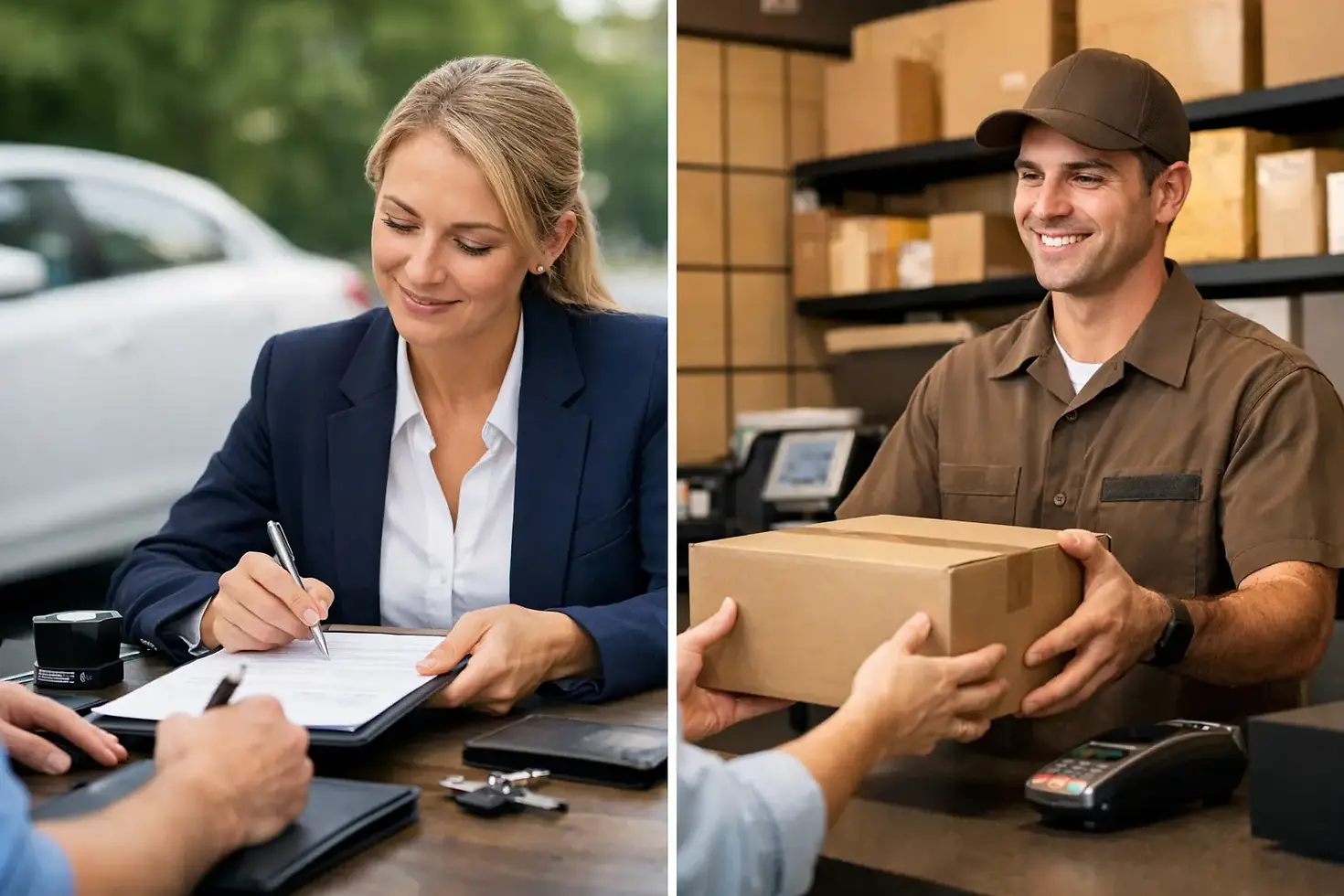
Mobile Notary Versus UPS: Which Fits Best?

If you need a document notarized before work, after a hospital visit, or while coordinating paperwork for a parent, the question is not just where to go. It is whether mobile notary versus UPS is the better fit for your situation. Both can be valid options, but they solve very different problems.
For some people, a UPS Store works well because it is familiar, public, and easy to find. For others, a mobile notary is the practical choice because the notary comes directly to the signer, often on short notice and in locations that a retail store simply cannot serve. The right answer depends on your timeline, mobility, privacy needs, and the type of document appointment you are trying to manage.
Mobile notary versus UPS: the core difference
The biggest difference is simple. At a UPS Store, you travel to the notary during store hours. With a mobile notary, the notary travels to you at a home, office, hospital, care facility, school, or another agreed location.
That difference affects almost everything else. It changes how much time you spend, how easy the appointment feels, how much privacy you have, and whether the notarization is even realistic for the signer. If the signer is elderly, recovering, working long shifts, caring for children, or unable to leave a facility, the convenience gap becomes significant very quickly.
A mobile notary is not just a transportation alternative. It is a service model built around accessibility and scheduling flexibility. UPS notary service is generally built around retail convenience for people who can come in during posted business hours.
When UPS may be the better option
UPS can make sense when your situation is straightforward. If you have one or two documents, the signer is fully mobile, the store has a notary available, and you can visit during business hours, it may be enough.
This option often appeals to people who are already out running errands. You may be shipping documents, making copies, or printing forms and decide to get a signature notarized at the same stop. For a simple transaction, that can be efficient.
Cost is another reason some people start with UPS. If you only compare the notarization fee itself, a retail location may appear less expensive than a mobile appointment. That is often true on the surface because mobile notary service usually includes travel and convenience as part of the service.
Still, lower posted cost does not always mean lower real cost. If you take time off work, coordinate transportation for a family member, arrange wheelchair access, or make multiple trips because the signer or identification was not ready, the total burden can rise fast.
When a mobile notary is the better fit
A mobile notary is usually the stronger choice when the document matters, the timing is tight, or the signer cannot easily get to a store. This is especially true for hospital signings, power of attorney documents, elder care paperwork, school forms, business documents, and family matters that need careful attention.
The value is not only convenience. It is also control. You choose the location, schedule, and setting. That can make a real difference when someone is signing important documents under stress.
For example, a hospital patient may not be able to leave the room. An assisted living resident may need family present. A working professional may need an evening appointment at home after normal office hours. A business may want several employees to sign at the office without disrupting the day. In those cases, a retail counter is often not the most practical setup.
Convenience is not a small detail
In a comparison of mobile notary versus UPS, convenience is often treated like a luxury. In reality, it is frequently the deciding factor that makes notarization possible at all.
If the signer has limited mobility, no transportation, a demanding work schedule, or caregiving responsibilities, getting to a store may be the hardest part of the process. The document may be ready. The identification may be ready. The signer may be willing. But the logistics can still stop everything.
A mobile notary removes that barrier. The appointment happens where the signer is most comfortable and where the required witnesses, family members, or staff can be present if needed. That can reduce mistakes, missed appointments, and unnecessary delay.
For residents and businesses in East Contra Costa County, this can be especially helpful when time-sensitive paperwork needs to be handled without adding another trip across town.
Privacy and setting matter more than most people expect
Not every notarization is sensitive, but many are. Estate planning documents, medical forms, guardianship paperwork, affidavits, and business records often involve private conversations or emotional circumstances.
A UPS Store is a public retail environment. That does not make it improper, but it does mean there may be people nearby, activity at the counter, and limited room for a calm, private experience. For some signers, that is fine. For others, it adds stress.
A mobile notary provides a more controlled setting. At home, in a private office, or in a care facility room, signers can review documents with fewer distractions. Family members or authorized parties can be present without the pressure of standing at a public counter. When someone is elderly, ill, or handling difficult family decisions, that difference can matter a great deal.
Availability and urgency
This is where many comparisons become clear. UPS availability depends on store hours and whether a commissioned notary is on site when you arrive. Even if the location offers notary service, it is smart to confirm availability before making the trip.
A mobile notary usually operates by appointment, which can be a major advantage when you need service outside standard business hours. Evening, weekend, and same-day appointments can be essential for people with urgent deadlines or limited flexibility.
If the document must be signed today, if a family member is only available after work, or if a patient’s condition makes timing critical, scheduled mobile service is often the more dependable path.
Accuracy and document readiness
Neither a UPS Store nor a mobile notary can give legal advice, but the service experience can still differ. In a mobile appointment, there is often more time and focus to confirm that the signers are present, identification is available, and notarization requirements are understood before the appointment begins.
That extra coordination can help prevent avoidable problems. Missing ID, absent signers, incomplete documents, or confusion about witness needs can delay any notarization, no matter where it happens. A detail-oriented mobile notary service often helps clients prepare so the appointment goes more smoothly.
That is particularly helpful with larger family matters, healthcare paperwork, or business signings involving multiple people. In those settings, organization and punctuality are not extras. They are part of getting the job done correctly.
Cost depends on what you are measuring
If you are only measuring the notarization stamp fee, UPS may look like the cheaper option. If you are measuring total value, mobile service often justifies the additional cost.
Think about what you are buying. With a mobile notary, you are paying for travel, scheduling flexibility, location convenience, and a service designed around your circumstances. For many clients, that means less time off work, less coordination, less transportation hassle, and less stress.
That does not mean mobile service is always the right choice. If your situation is simple and you are already near a store during business hours, UPS may be perfectly reasonable. But when the appointment involves urgency, health issues, multiple signers, or privacy concerns, the added value of mobile service becomes easier to see.
Which option is best for your situation?
If you can travel easily, have a simple notarization, and do not mind working around store hours, UPS may be enough. If you need the notary to come to you, need more scheduling flexibility, or want a private and dependable appointment experience, a mobile notary is usually the better fit.
That is why the best choice in mobile notary versus UPS is not really about one option being universally better. It is about matching the service to the reality of your day, your document, and your signer.
For clients handling urgent, personal, or location-sensitive paperwork, TRC Mobile Notary is built for that kind of appointment. When the signing needs to happen at your home, workplace, hospital, or care facility, the right service is the one that removes obstacles instead of adding them.
If your notarization is simple, a store may do the job. If your situation is more demanding, choosing a mobile notary can save more than time. It can make the process feel manageable when you need that most.


Comments